Every message is a shielded payment. The pool posts the sealed note in the same transaction, and no server ever carries it.
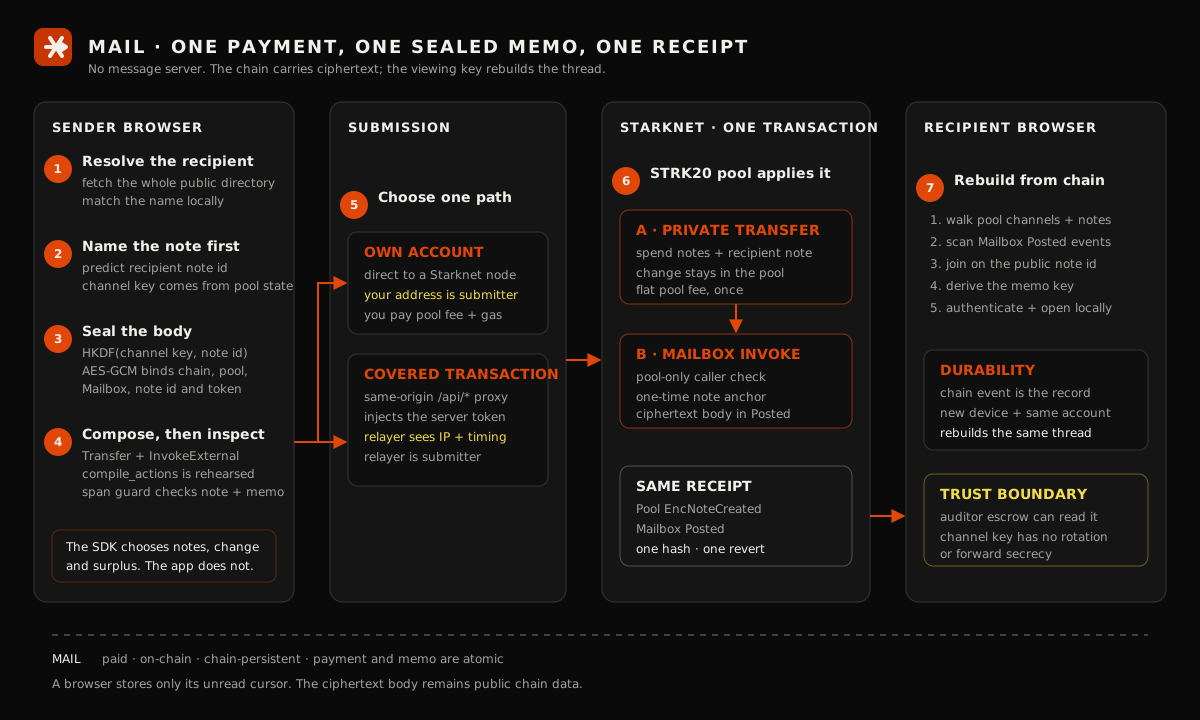
Mail is a private transfer with words attached. The money lands as a shielded note for the
recipient; the memo rides the same proved transaction as one extra action, and the pool —
not your account — calls our Mailbox contract with it. One hash, one receipt, one revert.
Why the pool is the caller
The Mailbox accepts calls from the STRK20 pool and refuses every other caller. That is the
whole of the sender anonymity on offer: what the public record shows is that a pool
transaction posted a memo, not which account did. A memo posted by an account directly would
print that account beside its ciphertext, which is why the contract does not allow it.
Where the key comes from
The pool already keeps a directional channel between any two accounts that have transacted, and that channel has a key: the sender derives it (it hashes the sender's private viewing key), and the recipient recovers it by decrypting the pool's channel record with theirs. It is the same material the pool uses to hide a note's amount. Mail derives its memo key from it, salted with the id of the note the memo rides with — so the words open only against that note, and no second secret is ever agreed through a server.
The honest parts
The auditor is inside the trust boundary. The channel key derives from viewing keys that are escrowed to the auditor at registration, so the auditor can recover and read the memo. The key is also static for the life of the channel, so there is no forward secrecy.
What is on chain. That a pool transaction invoked the Mailbox, the ciphertext and its size,
the block, and the id of the note it rides with — which the pool's own EncNoteCreated event
already publishes in the same receipt. The submitter is visible unless you spend a covered
transaction, in which case our relayer sees your IP and timing, as it does for any send.
What it costs. A mail is one pool transaction: the pool fee and gas, or one covered transaction. The memo adds no fee — the pool charges per transaction, not per action. A mail with nothing to pay still carries postage, because the note is how the reader finds it.
Where it lives. Nowhere but the chain. Threads are rebuilt from the pool's channels and the Mailbox's events with your viewing key — on this device, or any device you bring the account to. This browser keeps only a "seen up to block" cursor for the unread badge.
What the browser does before it proves
The app predicts the recipient note id from the current channel walk, seals the body against that
id, then asks the privacy SDK builder for a transfer plus one InvokeExternal. It reads the
compiled action span before proving and refuses unless there is exactly one matching recipient
note and the Mailbox calldata is the sealed envelope verbatim. A stale walk is therefore a free
refusal, not a fee paid to discover a broken memo on chain.
The name directory
Claiming a name publishes name → address on-chain. That is its entire function — a directory
nobody can read is not a directory — and it is opt-in.
Search, however, is private. The client fetches the whole list and matches locally, so the relayer never learns who you looked for. That asymmetry is deliberate: publishing your own name is your choice, and looking someone up should not be a disclosure.